
 JayseeOwner, HAS
 ToniHAS
 GraceFront desk
 FrancescaFront desk
Gentle earwax removal in Altamonte Springs
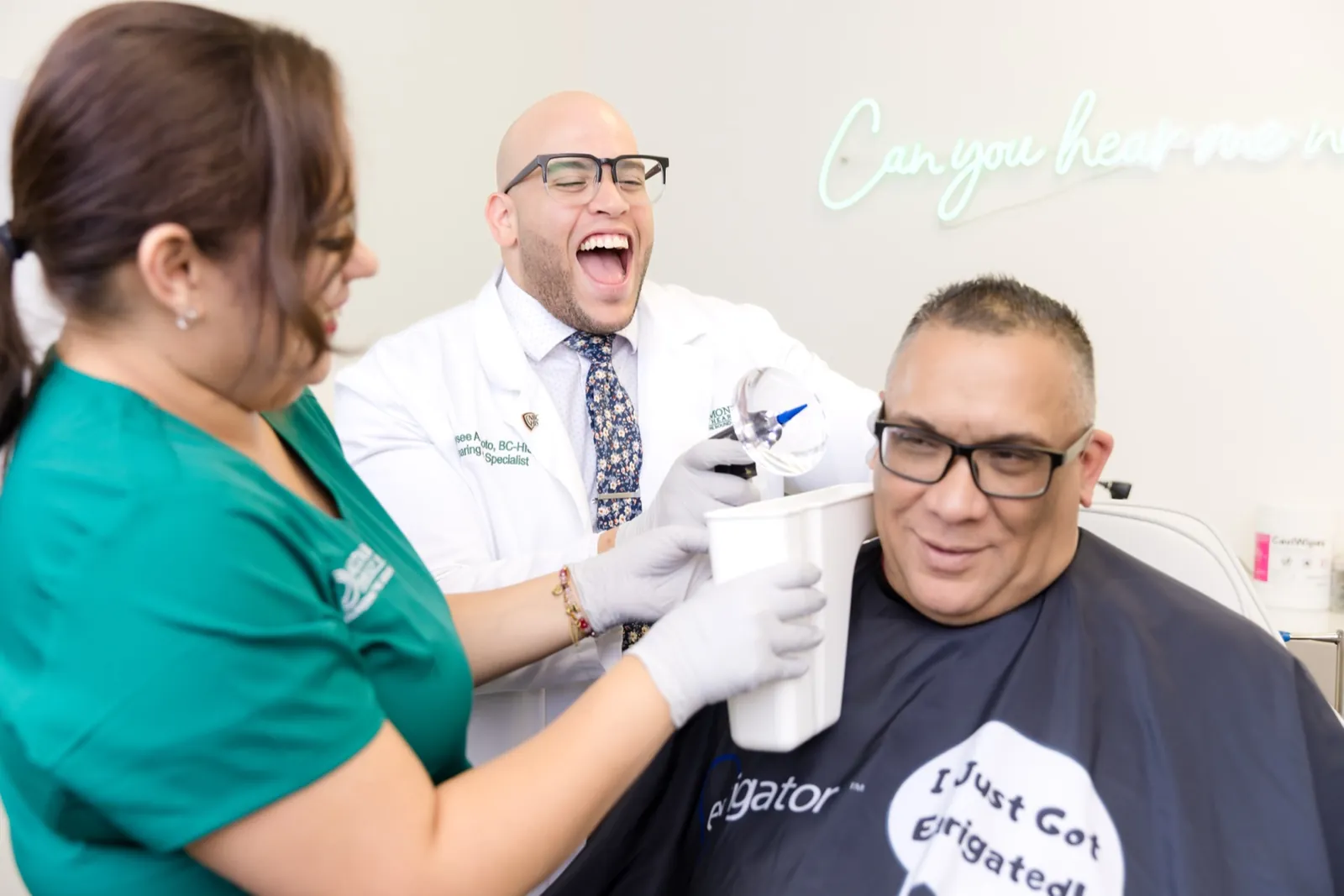
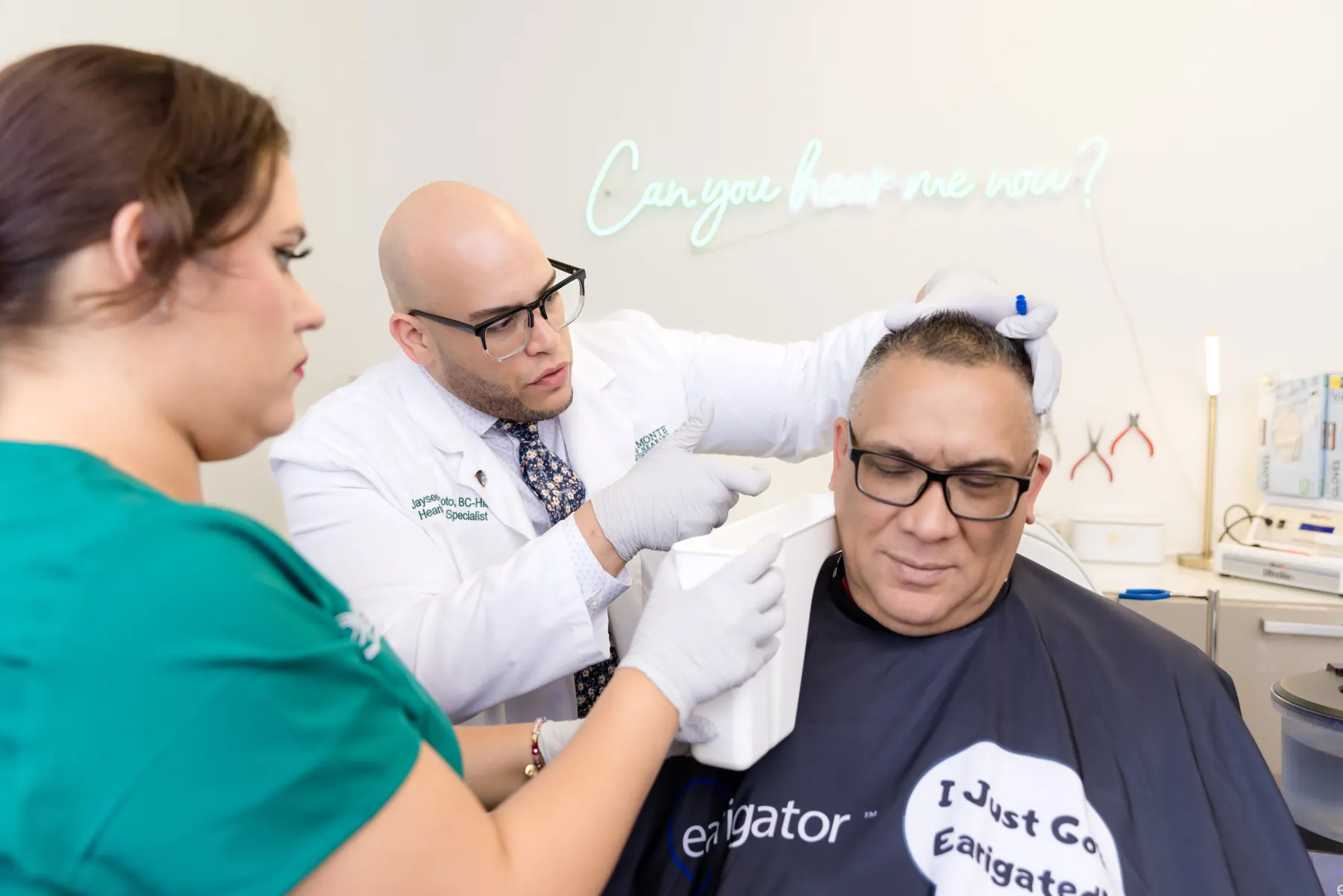
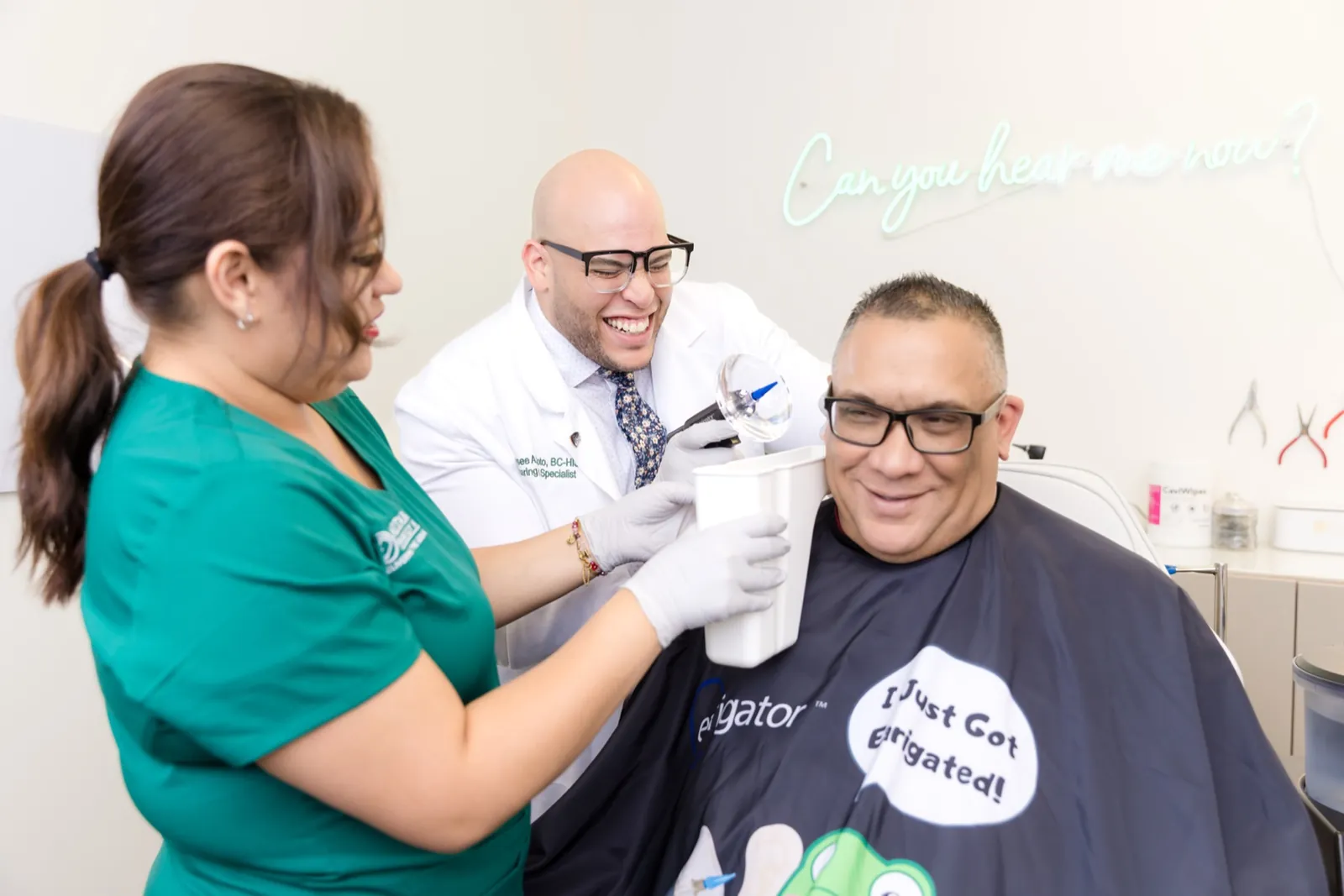
Our Hearing Aid Specialists examine your ears with a video otoscope, so you can see the image on screen. If irrigation is appropriate, we use the Earigator, a warm water system, to remove the wax and then check your ears again.
- Video otoscopybefore every cleaning
- Earigatorbody-temperature irrigation
How earwax removal works
- Step 1
Health questions
You’ll complete a short screening questionnaire about your ear health, including any history of ear surgery, ear tubes, a perforated eardrum or recent ear infections. These conditions can make irrigation unsafe, so we check before we begin.
- Step 2
Ear exam
We examine your ear canals and eardrums with a video otoscope, a small camera that displays the image on a screen you can see. This helps us assess the wax buildup and whether irrigation is appropriate.
- Step 3
Irrigation
The Earigator uses water warmed to body temperature at a controlled, low pressure to gently flush out the wax. Body-temperature water helps prevent the dizziness that cooler water can cause.
- Step 4
Follow-up check
We examine your ears again with the video otoscope, so you can see the result on screen, and we explain how to care for your ears at home.
Why your ears make earwax
Earwax, or cerumen, is a natural part of how your ears stay healthy. It traps dust and debris, keeps the skin of the ear canal moisturized, and helps protect against infection. In most people, it gradually moves out of the ear on its own.
Problems start when that natural movement is blocked, for example when wax is pushed deeper by cotton swabs, or when hearing aids or earbuds are worn often. Built-up wax can then block the ear canal and cause muffled hearing, a feeling of fullness, or discomfort.
Signs you may need earwax removal
- One ear feels blocked, full or like it’s underwater
- Sounds have become muffled in one or both ears
- Your hearing aids whistle, or don’t sit comfortably anymore
- You used cotton swabs and your ears feel worse
- You have a hearing test coming up and tend to build up wax
Seek medical care immediately if your hearing drops suddenly, even if your ear feels blocked or you have a history of earwax buildup.
Why professional earwax removal matters
An ear examination helps us choose an appropriate approach to wax removal. Your ear health and medical history matter, because irrigation is not suitable for everyone.
If the wax cannot be cleared safely in our office, we’ll explain whether softening drops, a return visit or referral to an ear, nose and throat physician would be appropriate.
Before your visit
Have another question? Call our office, and we’ll be happy to help.
Does earwax removal hurt?
The Earigator uses body-temperature water at controlled pressure. You may feel water and pressure during the procedure. Tell us immediately if you feel pain or dizziness so we can stop and reassess.
Should I use cotton swabs to remove earwax?
Avoid putting cotton swabs or other objects into your ear canal. They can push wax deeper and injure the ear. We can explain safer care based on your ears and symptoms.
Is ear candling safe?
No. Ear candling does not reliably remove earwax and can cause burns or other ear injuries. Ask a healthcare professional about appropriate care for blocked or uncomfortable ears.
How do I know whether earwax is affecting my hearing?
Symptoms alone cannot tell you. An ear examination can identify wax buildup, and a hearing evaluation may be needed to assess other causes. Seek medical care immediately for a sudden drop in hearing, even if you think wax is responsible.
We accept many insurance plans. Bring your insurance card, and we’ll check your benefits for you.
Get your ears checked
Book an earwax removal appointment online or call our office to discuss your symptoms. Missed calls are returned within one business day.